
By Harold Pease, Ph. D.
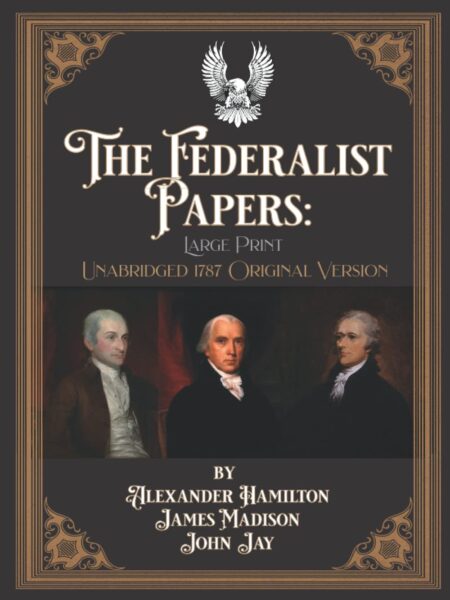
A newspaper editor once wrote me of the difficulty in finding a columnist expressing the constitutional viewpoint. I was impressed that he was making his way through the Federalist Papers and considered it a good read. Few today can identify what it is or how it came about. Today the Federalist Papers would be too deep a read for most college students—even many law school students. But it houses the thought processes and debates behind the Constitution, the document that caged the natural tendencies of government more than any governing document in world history. An understanding of the Constitution without this resource is not possible. And because the Constitution is based upon natural law, which does not change, it applies in all generations and in all societies. Likely not one in 20 today can defend the Constitution. from this perspective.
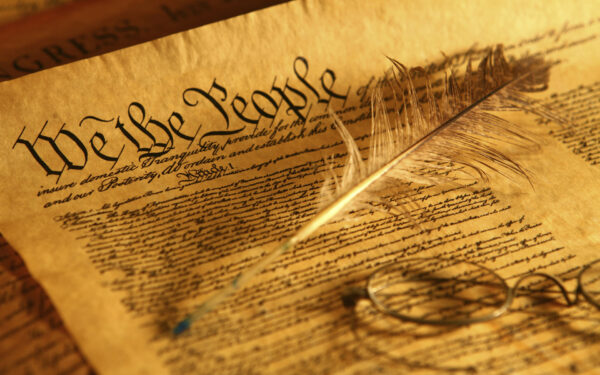
Constitutional principles were once taught at every level of education and stories of the sacrifice of our Founders frequently recited with admiration. Today few schools teach these principles in grade school and fewer still in high school. In college U.S. History and Political Science classes the Constitution is tucked in the back of textbooks as an appendix, hence few actually read it. The history of the Constitution’s origin is housed in a chapter but constitutional principles seemingly have only informational value.
Some colleges or universities have courses on the Constitution for political science majors but almost, without exception, students are not required to actually read it, heavy emphasis is given instead to case law. Hillsdale College, and independent professors may be the only exceptions. The same is true in law school. Original intent is hardly mentioned. Law schools provide our attorneys and our judges, most with too little, on original intent. One rogue Supreme Court decision can effectively destroy large chunks of the Constitution and almost no one notices or cares. Too few understand that the Supreme Court is not the supreme law of the land over the Constitution. The Founders would have never permitted nine justices to destroy foundation principles. Sadly, I never met one having a Ph. D. in U.S. History or Political Science who, to get the degree, actually was required to read the U.S. Constitution in full. Nor have I met a lawyer having to do so. Case law yes, loads of it, but not the Constitution in full or natural law upon which it is based.
My point, if colleges give no emphasis to constitutional study how can we expect the student to do so either? Many years ago U.S. News and World Report reported a study showing that most Americans could not pass the constitutional questionnaire for citizenship, so constitutionally illiterate are we. This document is only of minimal value to journalism or communication majors as well. But these professions serve as information filters in our newspapers, magazines, radio, television news programs, or in social media, even podcasts as well.
The media has divided citizens into two warring camps liberals and conservatives, lumping constitutionalists and libertarians with conservatives and pretends there exists no other viewpoints. Rarely is original intent allowed into the discussion as in The Federalist Papers. Thus a liberal moves further, faster from original intent than a conservative but both still move away although at different speeds until the liberal no longer cares if the grant of power is constitutional or not, which is where we are today. Until then both maintain the constitutionality of their position by the latest perversion, or a combination of perversions, to justify the recent perversion. And each perversion of original intent invites another until after a period of time the ending perversion no longer resembles the original grant of power thus authority is essentially manufactured out of thin air. All maintain they follow the Constitution when neither has. Traditionally both major groups problem-solve primarily by increasing federal power without specific constitutional authority. If the document is properly understood this cannot be done without damaging the fabric of the document. A constitutional provision either CLEARLY grants the “over-reach” or it doesn’t. If it doesn’t we can’t pretend that it does. But the Constitution is the law of the land and all in authority swear by oath to preserve it.
Richard Nixon and Jimmy Carter violated the Constitution with impunity as did both Bush presidents. The Tea Party movement, primarily constitutionalists, rose up in 2009 as much against George W. Bush, a conservative, as against the incoming president Barack Obama, a liberal. It used to matter if a president did not carefully follow the Constitution. Barack Obama, violated the constitution more than any president preceding him and Joe Biden more than Obama. In fact, there were few things that Biden did that were constitutional. Today both Democrats and Republicans defend their president routinely when he violates it. Donald Trump, not particularly a constitutionals, has followed it more closely than any previous president since Ronald Reagan —37 years ago. He also appointed three largely constitutionalist judges. These made the Court more fundamentalist then decades previous.
Of the two major political parties the Democrats rarely cite the document and seem almost contemptuous of it. In fact, most of what they propose is easily argued to be outside the Constitution. They used to defend major parts of the Bill of Rights but I do not see much of that anymore. Republicans sometimes carry the document on their person but do not hold to it and thus much of what they propose is also outside of the Constitution but they do use the word Constitution more than do Democrats, if that means much. This generation knows that the Constitution was a good thing, probably should be revered, at least historically, but they know little of the principles housed therein and have no idea how to vote to get back to it. Getting back to it is never considered. This they will never get from the media, political party, or currently, it seems, not even the institutions of learning—only private study.
That my new editor would find it difficult to find columnists that express the constitutional viewpoint is easily understood, as is the fact that newer columnists, lacking this understanding, are far more likely to express views in opposition to it. Constitutional illiteracy is almost universal to the point that those qualified to defend the Constitution as designed are becoming extinct. Students are not likely to defend it if they never experienced it being defended. A real danger exists that if too few know or value its principles we will lose it—perhaps we already have. Some say it is no longer relevant for our times. They are so wrong.
Dr. Harold Pease is an expert on the United States Constitution and a syndicated columnist on current events. Read his weekly columns at www.LibertyUnderFire.org Column #863 Help preserve our Republic while we still can by sharing this column.