
By Dr. Harold Pease
We think of the Pilgrims enjoying abundant food on the first Thanksgiving Fall 1621, but this was not their real reality. Few mention the starving times the first year in 1620 when half died of starvation that winter. Harvests were not bountiful in that year and the next two. Plymouth was beset by laziness due to lack of incentive and thievery due to hunger.
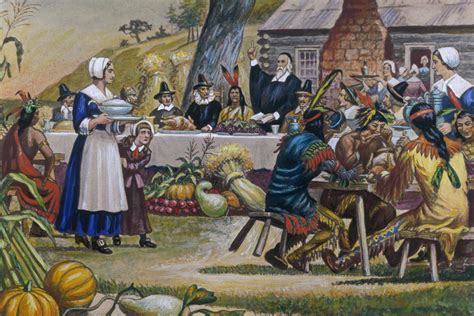
William Bradford, the governor of the colony, in his History of Plymouth Plantation reported that “much was stolen both by night and day” to alleviate the prevailing condition of hunger. The “feast” of the first Thanksgiving did fill their bellies briefly, he reported, and they were grateful, but abundance was anything but common. Why did this happen? Because they had fallen victim to the socialistic philosophy of “share the wealth.” This dis-incentivized the productive base of society.
Then suddenly, as though night changed to day, the crop of 1623 was bounteous, and those thereafter as well, and it had nothing to do with the weather or soil. Bradford wrote, “Instead of famine now God gave them plenty and the face of things was changed, to the rejoicing of the hearts of many, for which they blessed God.” He concluded later, “any general want or famine hath not been amongst them since to this day.”
One variable alone made the difference and ended the three-year famine. They abandoned the notion of government (or corporation) owning the means of production and distribution in favor of the individual having property and being responsible to take care of himself. Before, no one benefited by working because he received the same compensation as those who did not. After the change everyone kept the benefits of his labor. The basic natural law, “you reap what you sow,” was violated. You can’t eat what is not sown. In a just society those who chose not to work basically chose also to be poor and the government (corporation) does not confiscated from those who produced to give to those who will not. People may share their wealth as in giving charity but government may not morally confiscate your money and give it to another.
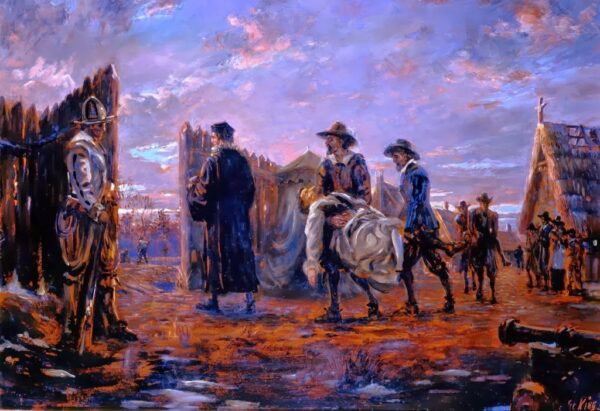
Ironically all this could have been avoided had Plymouth consulted history and communicated with their neighboring colony, some distance south of them, who had been down the same trail 13 years before. Jamestown too was first a socialist society where “each produced according to his ability and received according to his need,” (revitalized by Karl Marx centuries later), which, of course, affected supply. One cannot divide what does not exist. Our textbooks tell us that only one of twelve survived the first two years for precisely the same reason, starvation. The problem, as noted by Tom Bethel in his work The Noblest Triumph: Property and Prosperity through the Ages, was identified by an unnamed participant as “want of providence, industrie and government, and not the barenness and defect of the Countrie.”
Captain John Smith is credited with having saved the floundering Virginia colony by his “no workie, no eatie” government program (the Virginia Company was the government) and was hated. Addicted to the promise of getting something for nothing, even if it is always less than promised, the receiving part of the population will always oppose their not getting their “fair share.” Sound familiar? Captain Smith was eventually carted off to England in chains as fast as the parasitic population could do so. Once again, why? Philip A. Bruce in his Economic History of Virginia in the Seventeenth Century, p. 121, called it agricultural socialism. “The settlers did not have even a modified interest in the soil…. Everything produced by them went into the store, in which they had no proprietorship.” When settlers finally were allowed to own their own property, and keep what they produced, things changed over night.
Colony Secretary Ralph Hamor wrote of incoming prosperity, beginning in 1614, after ownership of land was allowed. “When our people were fed out of the common store, and labored jointly together, glad was he [who] could slip from his labor, or slumber over his tasks he cared not how, nay, the most honest among them would hardly take so much true pains in a week, as now for themselves they will do in a day, neither cared they for the increase, presuming that however the harvest prospered, the general store must maintain them, so that we reaped not so much corn from the labors of thirty as now three or four do provide for themselves.”
Let us be grateful for the prosperity that we have—even the poorest among us. Jamestown and Plymouth set us upon a course that recognized that prosperity requires incentive to flourish and that the profit motive stimulates industry. We are so grateful that, having recognized the poison of “the share the wealth” philosophy, they purged it from their midst and proceeded to make America the most prosperous country on earth.
Since Franklin Delano Roosevelt was elected in 1932, however, America has eased, even more so in the 1960’s and 1970’s, progressively into a incentive destroying socialist economy. The recent government shutdown demonstrated how much money is forcibly taken from hard working citizen taxpayers and redistributed to the half of Americans that pay no federal income taxes; this through SNAP (Supplemental Nutrition Assistance Program —formerly Food Stamps, renamed to reduce stigma), and like programs (X22 Report, Ep. 3761b, Oct.27, 2025, 1:02:18). There are 42 million people in this country currently receiving food stamps, 12.3% of the U.S. population, 59% of all illegal aliens are collecting food stamps says Rob Finnerty of Newsmax (Ibid., Ep. 3762b, Oct, 28, 2025, 1:03:00). Supposedly it is against the law for illegals to be on the program but like everything else it is not enforced and they are.
Teachers generally are no longer sharing the early harsh lessons of our socialist beginnings in our first Thanksgiving. Chances are likely they never had it themselves. It is up to parents and grandparents to share the above. Perhaps you will be able to do so for those you love at the dinner table this Thanksgiving. Their failures taught them how to incentivize productivity resulting in giving our posterity the wealthiest, and 150 years plus after, the freest society in the history of the world. This forever, lest we forget what our first colonists learned in both societies! Socialism has never given prosperity to any society.
Dr. Harold Pease is an expert on the United States Constitution and a syndicated columnist on current events. Read his weekly columns at www.LibertyUnderFire.org Column #847
Help preserve our Republic while we still can by sharing this column.